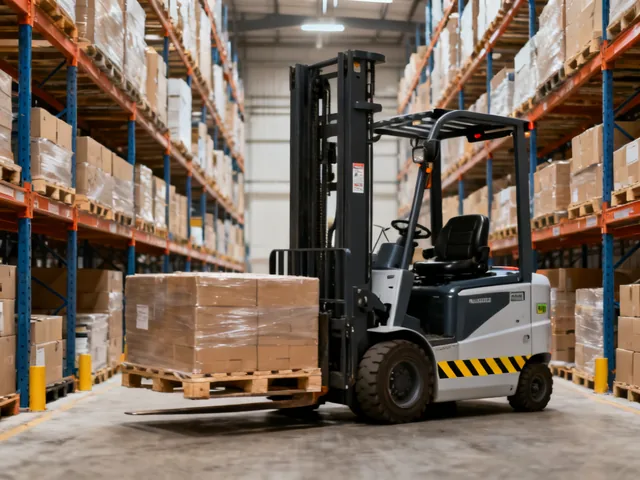
Counterbalance forklifts
Dock-to-staging moves where residual capacity at the working load center must stay honest under floor and ramp conditions.
Review forklift options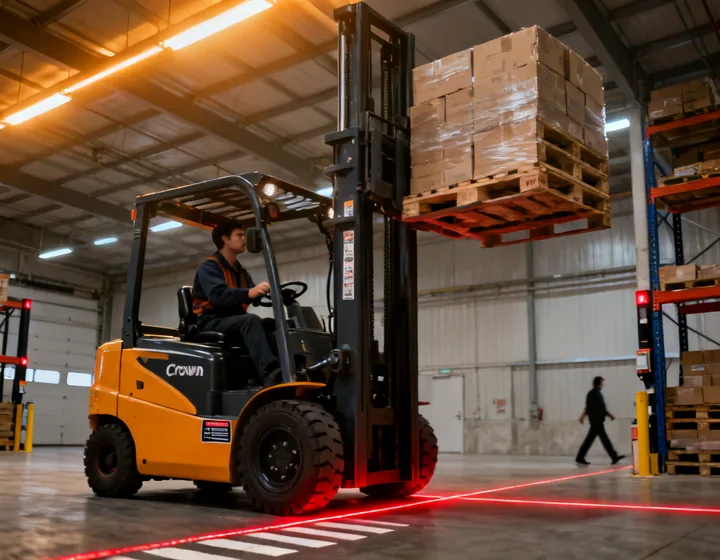
State load center, dimensions, aisle width, floor condition, duty cycle and residual capacity before comparing truck classes. Clearer inputs shorten evaluation and protect live cutover.
Cards introduce evaluation lanes. Dynamic catalog details live on the products page; here we keep the selection question visible.
Dock-to-staging moves where residual capacity at the working load center must stay honest under floor and ramp conditions.
Review forklift options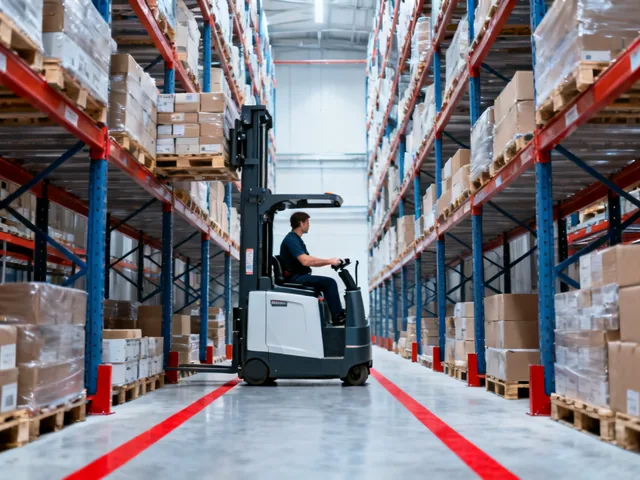
Selectivity and lift height trade against aisle width, beam clearance and guided-path constraints in reserve storage.
Review narrow-aisle options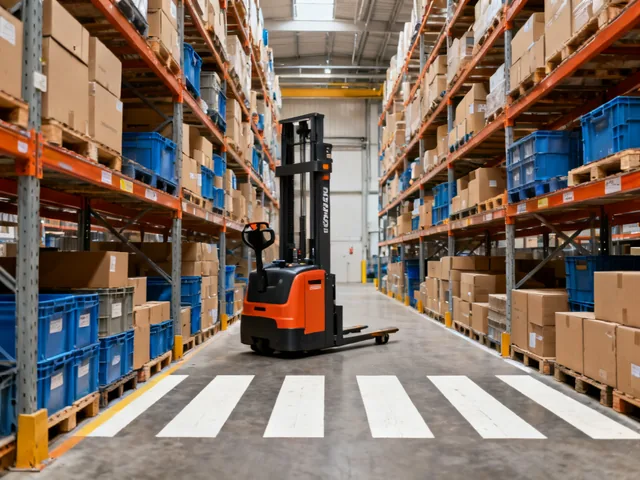
Horizontal travel and pick elevation where SKU velocity, operator path and replenishment collisions set real capacity.
Review pallet handlingRecord load center, dimensions, overhang, aisle geometry, floor condition and residual capacity at the working mast stage.
When AGV or AMR lanes share space, define routes, scanner fields, charging and traffic rules as testable requirements.
Keep maintenance access, diagnostics, critical spares and recovery procedures visible before operational handover.
Protect live outbound waves with controlled cutover, fallback states, commissioning windows and measurable acceptance gates.
Assign WMS, WCS, WES and PLC acknowledgements, timeouts and alarm escalation when trucks feed automation cells.
Separate average and peak work, battery or fuel windows, and how charging overlaps the longest promotional wave.
SKU depth, peak factor, temperature and pallet or tote mix change residual capacity, aisle strategy and recovery design. Mobile cards keep the same fields readable without a compressed table.
| Vertical | SKU depth | Peak factor | Temperature | Load-unit mix |
|---|---|---|---|---|
| E-commerce | Very high | 1.8–3.0× promo windows | Ambient | Tote / carton / pallet |
| Grocery | High | Cutoff-driven waves | Ambient + chilled | Case / roll cage / pallet |
| Cold chain | Medium–high | Dock-window limited | Chilled / freezer | Pallet dominant |
| Manufacturing | Medium | Takt-linked peaks | Ambient | Pallet / rack / kit |
| 3PL multi-client | Variable by client | Contract SLA peaks | Mixed | Client-defined units |
SKU depth: Very high
Peak factor: 1.8–3.0× promo windows
Temperature: Ambient
Load-unit mix: Tote / carton / pallet
SKU depth: High
Peak factor: Cutoff-driven waves
Temperature: Ambient + chilled
Load-unit mix: Case / roll cage / pallet
SKU depth: Medium–high
Peak factor: Dock-window limited
Temperature: Chilled / freezer
Load-unit mix: Pallet dominant
SKU depth: Medium
Peak factor: Takt-linked peaks
Temperature: Ambient
Load-unit mix: Pallet / rack / kit
SKU depth: Variable by client
Peak factor: Contract SLA peaks
Temperature: Mixed
Load-unit mix: Client-defined units
A useful first package is not a brochure request. It is a compact operating brief that lets engineering test whether counterbalance, reach or pallet-handling capacity can meet the stated peak without hiding recovery debt.
Include what the truck carries, how often each aisle is demanded, which host layer owns the mission when automation is present, where the site constrains travel and how a completed transaction will be accepted in FAT and SAT.